

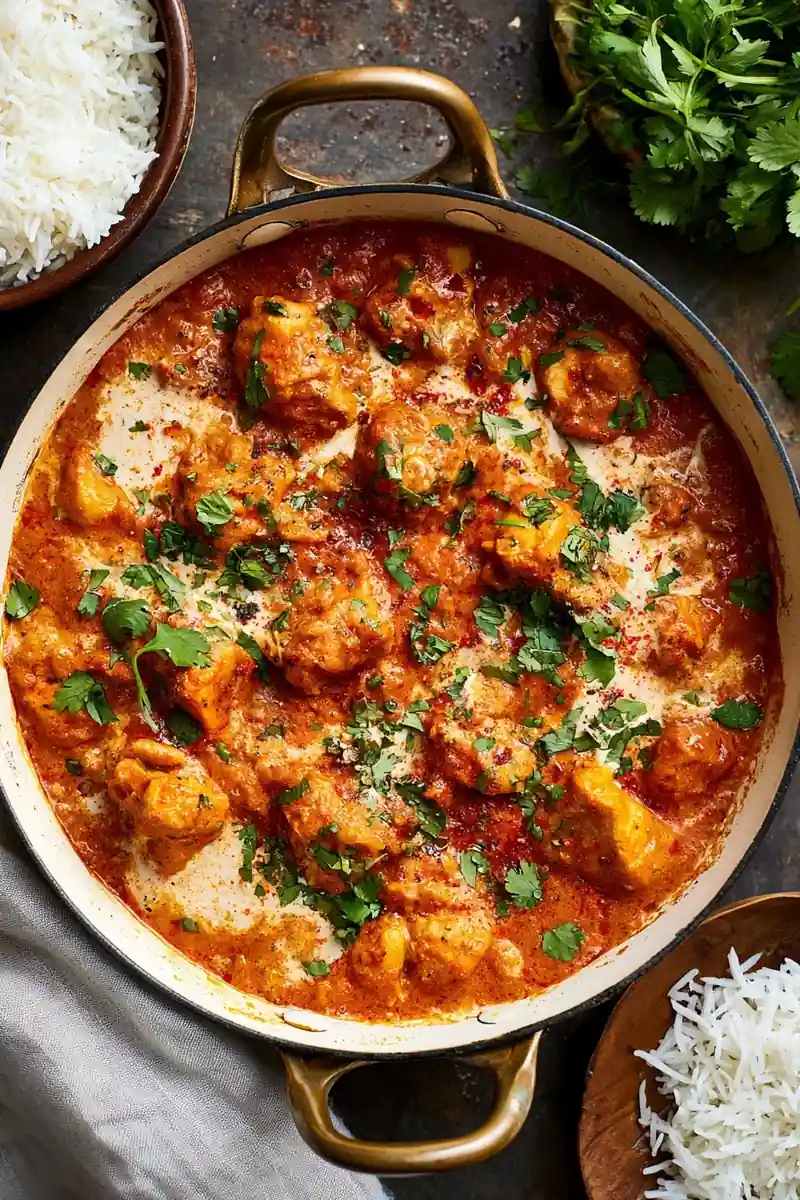
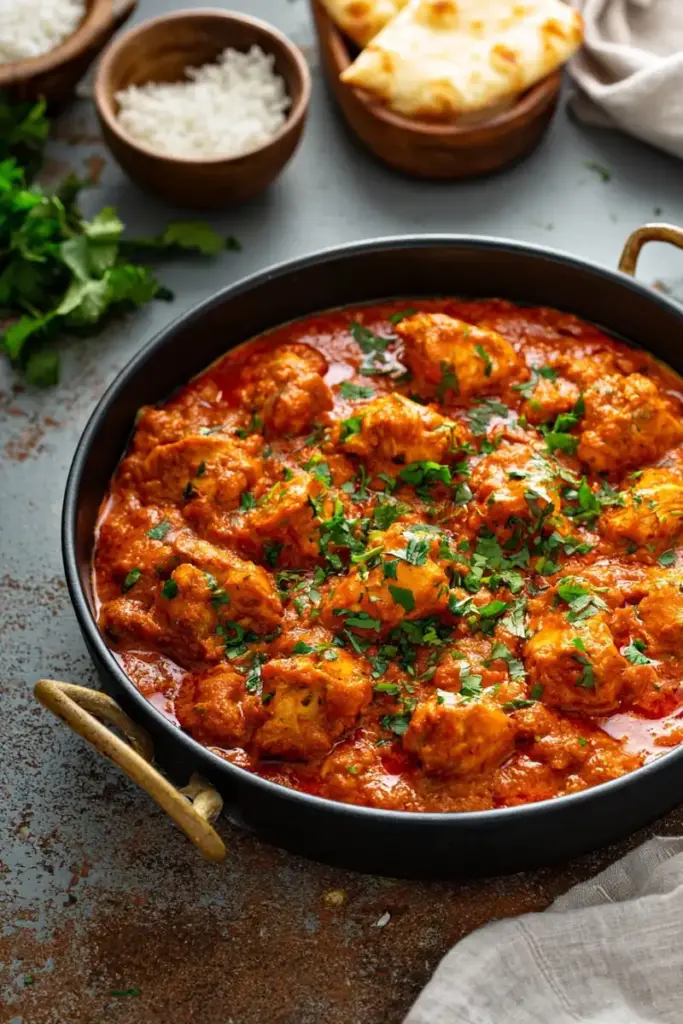
The sizzle of marinated chicken hitting a hot tawa, the fragrant swirl of spices blooming in buttery tomato sauce—this is the soul of a beloved modern classic: the chicken tikka masala recipe. Though often hailed as Britain’s national dish, its roots dance between Delhi’s smoky grills and Glasgow’s inventive curry houses, where South Asian flavors met British comfort food sensibilities. Today, this creamy tomato chicken curry is a global favorite, celebrated for its velvety sauce, tender morsels of charred chicken, and perfectly balanced warmth—not too fierce, but deeply flavorful. Our version stays true to the restaurant-style chicken tikka masala experience while making it achievable in any home kitchen. Whether you’re craving a cozy weeknight dinner or want to impress guests with an Indian chicken curry that feels authentic yet accessible, this homemade chicken tikka masala delivers. Pair it with garlic naan from your local bakery or try making it fresh—either way, you’re in for a treat. For more simple global flavors, check out our one-pan garlic butter chicken or dive into a spicier adventure with Chef John’s take on the classic.
Why You’ll Love This Chicken Tikka Masala Recipe
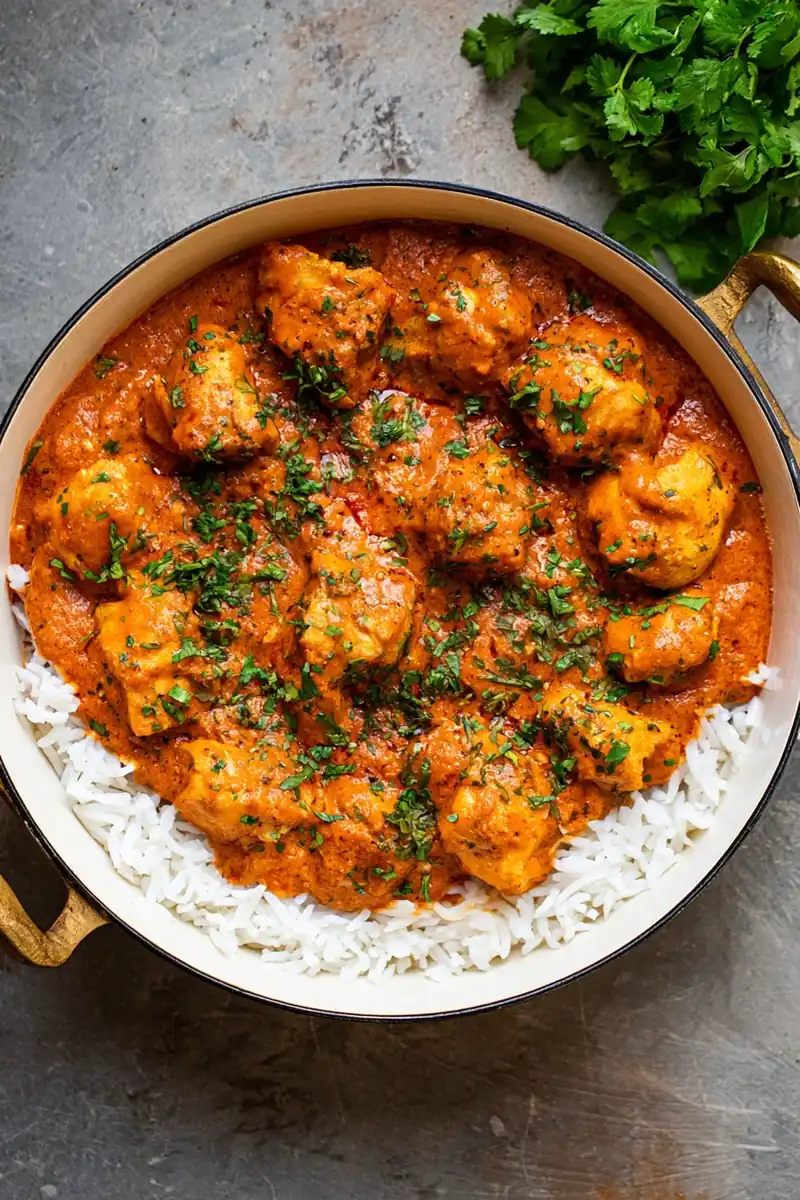
- Rich, Restaurant-Worthy Flavor Achieve the same deep, smoky-sweet complexity found in takeout versions thanks to a blend of garam masala, smoked paprika, and slow-simmered tomatoes—no MSG needed.
- Perfectly Tender Chicken Every Time Using boneless, skinless thighs marinated in yogurt and lemon juice ensures juiciness even after high-heat cooking.
- Creamy Without Being Heavy A touch of heavy cream finishes the sauce luxuriously, but we include healthier swaps later if you prefer a lighter version.
- Better Than Takeout Avoid hidden sugars and excess salt by making your own—all while saving money and reducing packaging waste.
- Meal-Prep Friendly This dish tastes even better the next day, making it ideal for batch cooking during busy weeks.
- Simplified Technique step-by-step approach.
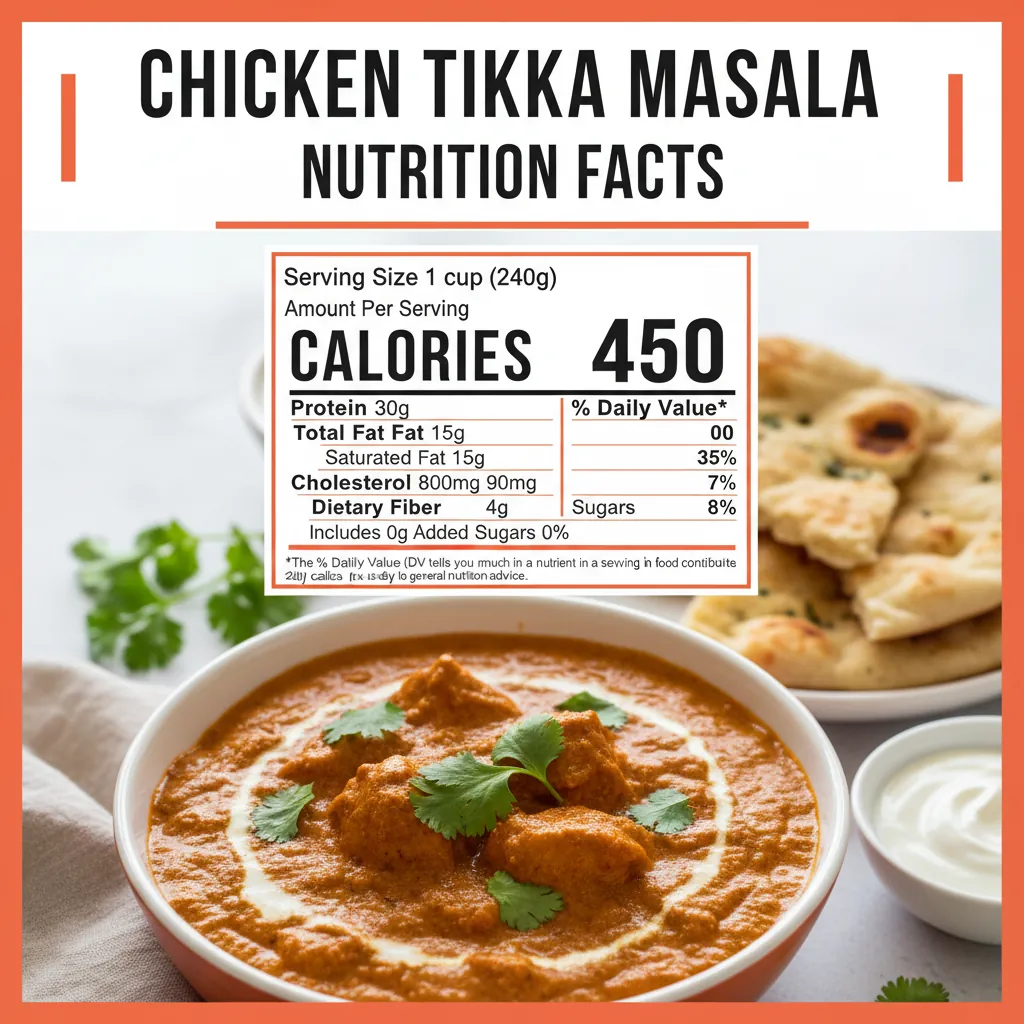
This chicken tikka masala recipe brings the world to your table—inspired by Indian techniques, refined through British culinary adaptation, and perfected for American home cooks. With over 15 million searches annually for “easy chicken tikka masala,” it’s clear this dish has become a staple in diverse kitchens. It balances authenticity with accessibility, using ingredients most can find at their local supermarket. The sauce develops richness through patience, not complexity—onions caramelized until deep amber, tomatoes simmered into silk, and spices bloomed to awaken their oils. Serve it at your next dinner party and watch guests reach for seconds before clearing the first plate. For a full Indian-inspired spread, pair this with potluck pasta salad for contrast or serve alongside watermelon feta salad to cool the palate. Includes 20 minutes marinating (minimum) and up to 2 hours for optimal flavor absorption. Plan ahead like a pro by prepping the night before. In a large bowl, combine yogurt, lemon juice, cumin, coriander, garam masala, turmeric, smoked paprika, minced garlic, grated ginger, and ½ tsp salt. Whisk thoroughly, then fold in chicken pieces until fully coated. Cover and refrigerate for at least 20 minutes—ideally 2 hours—for maximum tenderness and spice infusion. The yogurt’s lactic acid gently breaks down proteins, preparing the meat for high-heat cooking without drying out. Heat 1 tbsp oil in a grill pan, cast-iron skillet, or under the broiler. Remove chicken from marinade (shake off excess), and cook in a single layer for 6–8 minutes total, turning once, until browned and cooked through. Internal temperature should reach 165°F. Do not overcrowd—work in batches if needed. Transfer to a plate and set aside. This step mimics the traditional *tandoor* (clay oven) method, giving the chicken that slightly charred, smoky essence. In the same pan, add remaining oil. Over medium heat, sauté onions gently for 10–12 minutes, stirring occasionally, until deeply golden and caramelized. Add a pinch of salt to draw out moisture. This slow build creates a rich foundation; rushing leads to burnt bits and bitter taste. Once soft and jammy, stir in any remaining spice mixture from the marinade for layered flavor. Stir crushed tomatoes into the onions, scraping up any browned bits for added complexity. Bring to a gentle simmer, then reduce heat to low. Cook uncovered for 15 minutes, stirring occasionally, allowing the sauce to thicken and mellow. The acid from tomatoes will soften, melding with spices into a velvety base. Taste and adjust salt if needed. Return the cooked chicken and any juices to the pan. Pour in heavy cream, stirring gently to combine. Simmer for another 5–7 minutes over low heat—do not boil vigorously, as this may cause the cream to split. The sauce should coat the back of a spoon thickly. Adjust seasoning with additional salt or a pinch of sugar if tomatoes are too sharp. Remove from heat and stir in fresh cilantro. Serve hot over steamed basmati rice or with warm naan bread for dipping. Garnish with extra cream swirls and a sprinkle of garam masala for aroma. For a complete meal, add sides like grilled corn or cucumber tea sandwiches. Based on USDA FoodData Central data per serving (approx. 1.5 cups). High in protein due to chicken, moderate in fat from cream and oil. Lower carb compared to other curries due to minimal sugar and no starchy thickeners. For a lighter version, consult skinnytaste’s healthier twist. Swap cream for coconut milk to reduce saturated fat while maintaining creaminess. Use leaner chicken and olive oil for cardiovascular benefits. These modifications still deliver bold flavor without compromising the essence of the dish. For budget-friendly ingredients, see our collection of easy ingredient swaps. Also explore grilled variations for a leaner, smokier take. In traditional Indian homes, chicken tikka masala isn’t typically found on menus—it’s a British-born homage to Indian flavors. Yet its presentation follows classic curry customs: served hot in a communal bowl, accompanied by fluffy basmati rice or buttery naan for scooping. Fresh cilantro, a wedge of lime, and sliced red onions offer bright contrast to the rich sauce. In South Asian culture, meals are often shared family-style, encouraging conversation and connection around the table. For modern twists, try spooning it over roasted sweet potatoes or into stuffed peppers for a low-carb option. This dish shines at dinner parties, where its vibrant color and aromatic steam instantly win guests over. Pair it with cool sides like copycat KFC coleslaw or a crisp grilled corn on the cob salad for balance. Make it a themed night: set the mood with bhangra music, serve mango lassi in mason jars, and finish with chocolate lava cake for dessert. Even on a weeknight, this creamy tomato chicken curry feels indulgent yet approachable—perfect for cozy nights with loved ones. Another frequent error lies in cooking technique: overheating the cream. Once added, the sauce must be gently simmered—not boiled. High heat causes dairy to curdle, breaking the emulsion and resulting in a grainy, unappetizing texture. Instead, keep the flame low and stir frequently. If you notice the sauce separating, remove from heat immediately and whisk in a spoonful of cold yogurt to stabilize it. Following careful temperature control ensures a velvety finish every time. For grilling enthusiasts, check out Serious Eats’ grilled version for smoky technique tips. Finally, improper seasoning undermines even the best execution. Many rely solely on pre-mixed curry powders without adjusting final salt or acid. Tomatoes vary in sweetness and acidity—always taste before serving. A pinch of salt or a splash of lemon juice can elevate the entire dish. Also, avoid overloading on spices upfront; they intensify during cooking. Layer them gradually and balance with cream and protein at the end. Underseasoned or overspiced curries are easy fixes when you listen to the dish as it cooks. Proper refrigeration keeps your chicken tikka masala safe and delicious for up to four days. Let it cool to room temperature within two hours of cooking, then transfer to an airtight container. Store sauce and rice separately to prevent sogginess. The flavors actually deepen overnight, making leftovers a highlight. When reheating, do so gently on the stovetop with a splash of water or broth to restore creaminess—microwaving can cause uneven heating and texture loss. For longer storage, freezing works well for up to three months. Freeze in portion-sized containers or freezer bags laid flat for quick thawing. Defrost overnight in the refrigerator before reheating. Avoid freezing with dairy-heavy versions unless using coconut milk, which freezes better. Upon reheating, stir in a little fresh cream or yogurt to refresh the texture. This makes it ideal for meal-prepping weekly lunches without monotony. To optimize meal prep, consider pre-marinating chicken and storing it in zip-top bags for up to 24 hours in the fridge. You can also prepare the onion-tomato base ahead and refrigerate for two days. When ready to cook, reheat the sauce, add cream and pre-cooked chicken, and serve in minutes. This strategy cuts active time dramatically on busy evenings. For more make-ahead ideas, try our baked avocado chicken burritos, another freezer-friendly favorite. While inspired by Indian flavors and cooking techniques, chicken tikka masala as we know it today likely originated in the UK—possibly in Glasgow or London—in the mid-20th century. It combines smoky chicken tikka (marinated and grilled) with a creamy, tomato-based curry sauce adapted to British palates. Still, the spices and yogurt marinade are deeply rooted in Indian culinary tradition. For the authentic base flavor, explore our easy Indian recipe at home. Absolutely. While traditional *tandoori* chicken is cooked in a clay oven, you can achieve excellent results using a stovetop grill pan, cast-iron skillet, or even your broiler. Just ensure high heat and minimal oil to get that charred, smoky exterior. If needed, skip searing entirely and poach chicken directly in the sauce for a softer texture. You can use full-fat coconut milk for a dairy-free option, or half-and-half for a lighter version. Greek yogurt thinned with milk also works, but add it off the heat to prevent curdling. For lowest fat, try cashew cream blended smooth—adds richness without dairy. Chicken tikka masala recipe is more than just a meal—it’s a testament to how food evolves across borders, uniting cultures one flavorful bite at a time. Whether you’re new to Indian-inspired cooking or a seasoned home chef, this dish invites you to explore bold spices, comforting textures, and global traditions right from your kitchen. And once you’ve mastered this creamy tomato chicken curry, why stop there? Journey through our collection of globally-inspired dishes like one-pan garlic butter chicken or dive into sweet endings with no-bake chocolate cheesecake.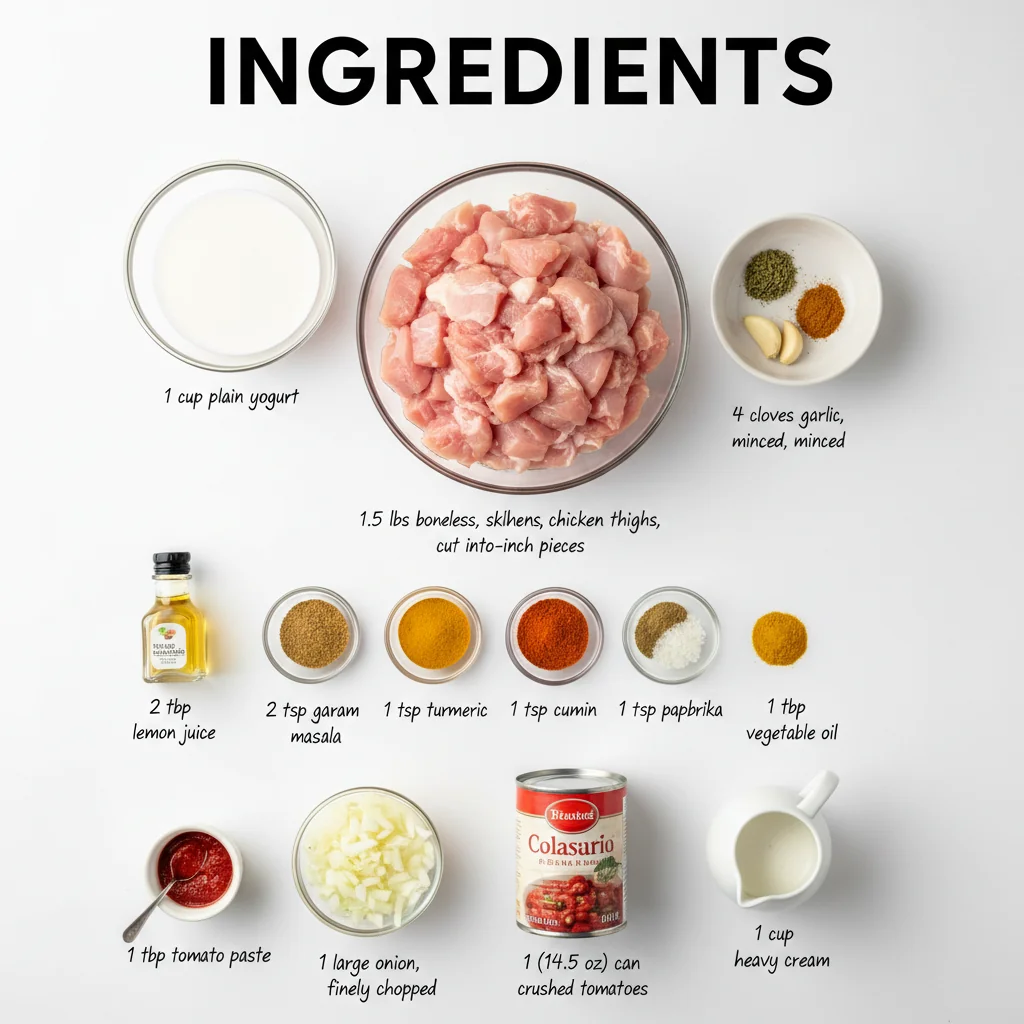
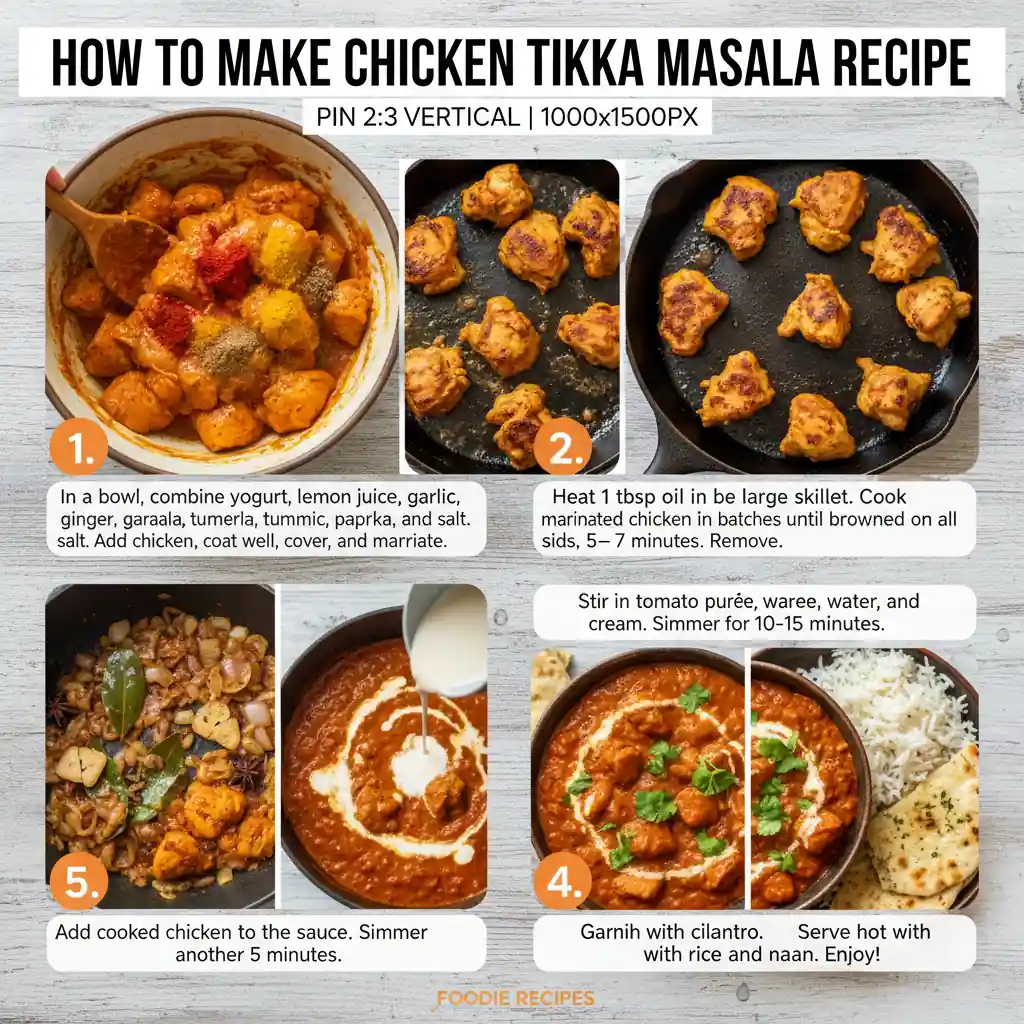
: Marinate the Chicken
: Cook the Marinated Chicken
: Sauté the Aromatics
: Simmer the Tomato Sauce
: Finish with Cream and Chicken
: Serve and Enjoy
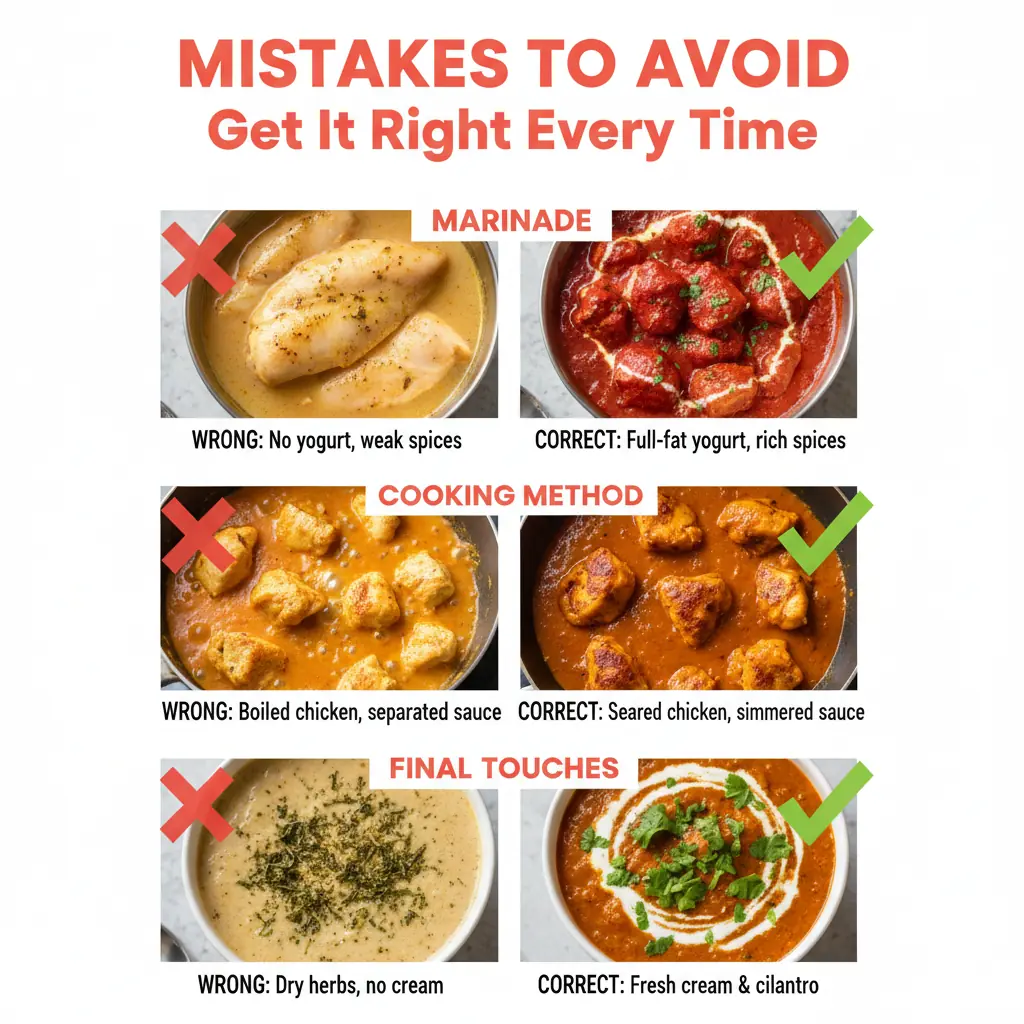
One of the most common preparation mistakes is skipping the marination time. While 20 minutes will infuse some flavor, letting the chicken sit in yogurt and spices for at least 1–2 hours dramatically improves texture and taste. The acids and enzymes in yogurt tenderize the meat, mimicking traditional *dum* cooking methods. Rushing this step leads to dry, tough bites rather than soft, juicy morsels. Always prep the marinade early and plan ahead—it’s the foundation of a great restaurant-style chicken tikka masala.Is chicken tikka masala actually Indian?
Can I make chicken tikka masala without a grill?
What can I substitute for heavy cream?
📚 Read More Delicious Ideas
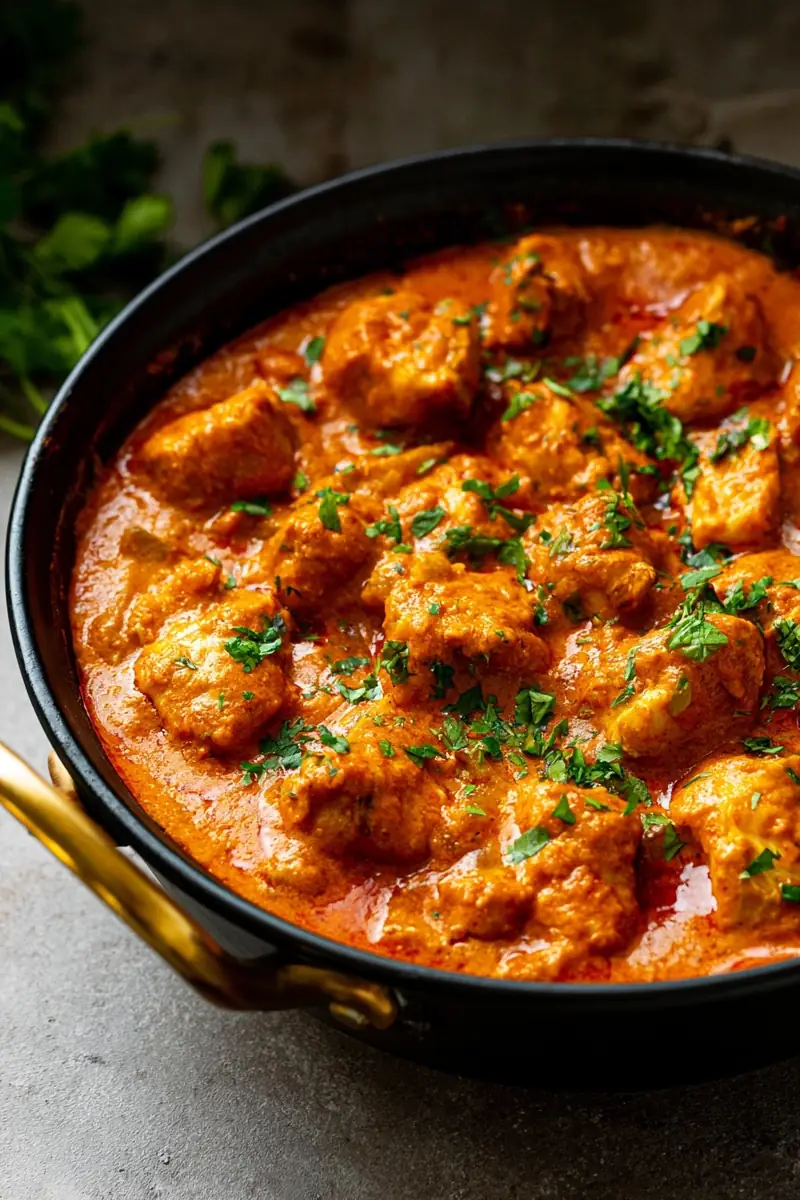

Easy Chicken Tikka Masala Recipe (Creamy & Flavorful)
Ingredients
Equipment
Method
Nutrition
Notes
Tried this recipe?