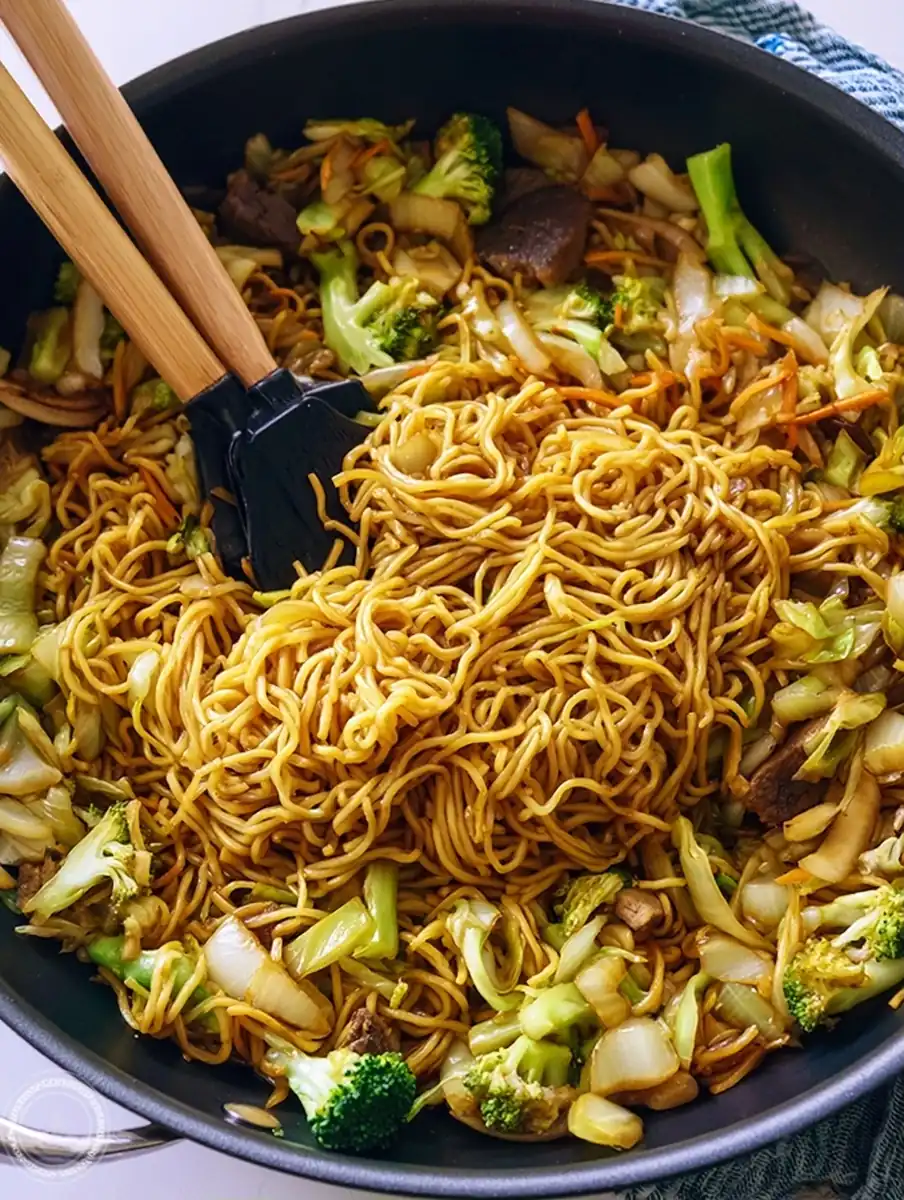

Ingredients
Equipment
Method
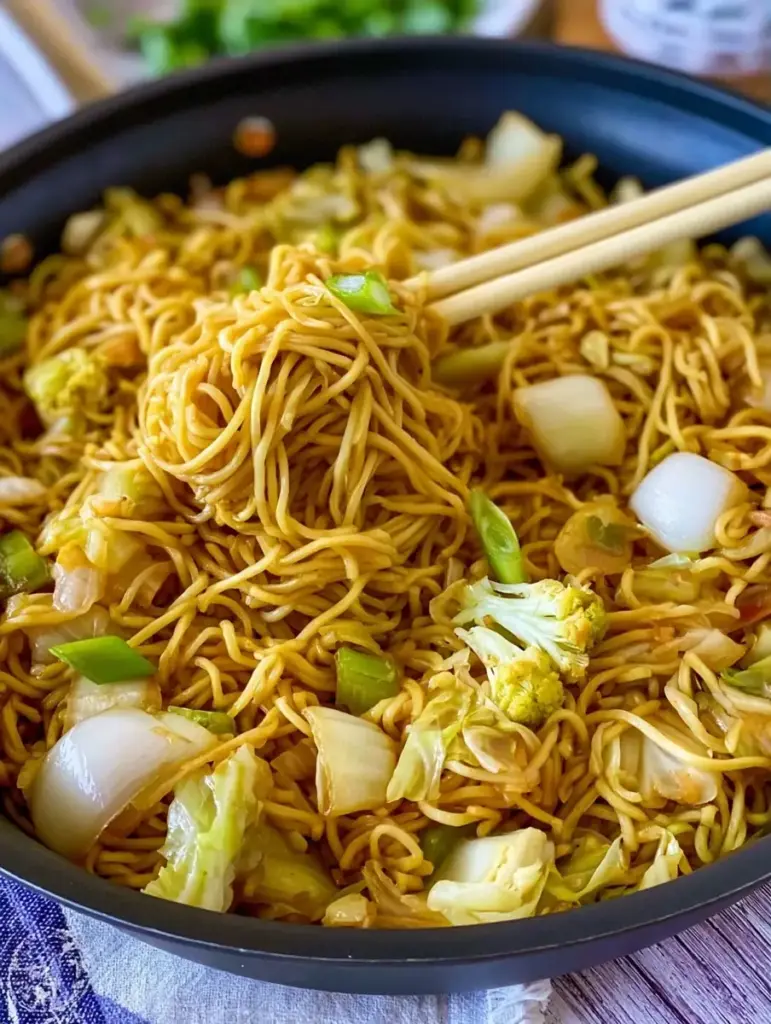
- Prepare all ingredients before starting. Shred cabbage, julienne carrots and celery, chop onion, and mince garlic. If using dried noodles, cook according to package, drain, rinse with cold water, then toss with a teaspoon of oil to prevent sticking. Fresh noodles may only need warming. Set aside.
- Heat a wok or large non-stick skillet over high heat. Add one tablespoon of peanut oil and swirl to coat. Once shimmering, add chopped onion and stir-fry for 30 seconds. Add minced garlic and stir constantly for 15 seconds to avoid burning.
- Add carrots and celery to the wok, stirring to coat with oil. Stir-fry for 1 minute, then add cabbage and vegetable broth. Toss continuously for 2-3 minutes until vegetables are crisp-tender and slightly wilted.
- Push vegetables to the edges of the wok, creating a well in the center. Add remaining oil and place noodles in the center. Let sit for 30 seconds to develop crispness, then add soy sauce, oyster sauce, and sugar. Toss everything together, incorporating noodles and sauce evenly over 2 minutes.
- Remove from heat. Drizzle with toasted sesame oil and toss thoroughly. If using protein, add now and fold in gently. Taste and adjust seasoning—add a pinch of sugar or a dash of white pepper if desired. Serve immediately, garnished with scallions and sesame seeds if preferred.
- Transfer to serving bowls. Enjoy hot for best texture. Leftovers should be stored in an airtight container and reheated with a splash of water to restore moisture.
Nutrition
Calories: 312 | Carbohydrates: 45 | Protein: 9 | Fat: 11 | Fiber: 3 | Sugar: 6
Notes
STORAGE: Store leftovers in an airtight container in the refrigerator for up to 3 days. Reheat gently over low heat with a splash of water or broth to restore moisture. Do not freeze as the texture will change.
MAKE AHEAD: You can prepare vegetables up to 24 hours in advance and store them in sealed containers in the fridge. Noodles should be cooked fresh for best results.
SUBSTITUTIONS: For a vegan version, use mushroom-based oyster sauce and verified plant-based noodles. Tamari replaces soy sauce for gluten-free diets. Whole wheat or soba noodles add fiber and nuttiness.
PRO TIPS: Use high heat and keep ingredients moving. Never skip *mise en place*—everything cooks fast. Finish with toasted sesame oil off-heat to preserve aroma.
SERVING SUGGESTIONS: Serve with hot and sour soup, egg rolls, or a simple cucumber salad. Pairs exceptionally well with grilled proteins like honey garlic chicken or beef fajitas.
Tried this recipe? Leave a star rating below and share your photo on Instagram @catcorakitchen #catcorakitchen — we love seeing your creations!
Tried this recipe?
Let us know how it was!